

Malta · Villages
Marsaxlokk: Where Malta Still Lives by the Sea

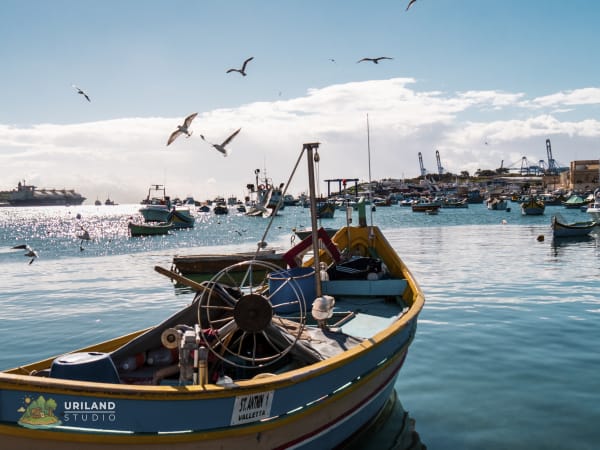
Marsaxlokk wakes differently from the rest of Malta. Before cafés fill their tables and visitors begin walking along the promenade, fishermen are already returning to harbour. Ropes tighten against wooden boats, boxes of fish reach the quay, and hundreds of brightly painted vessels move gently on the Mediterranean.
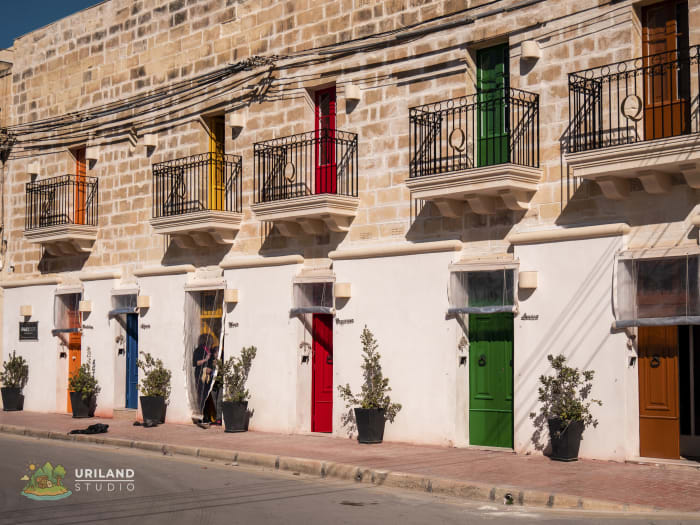
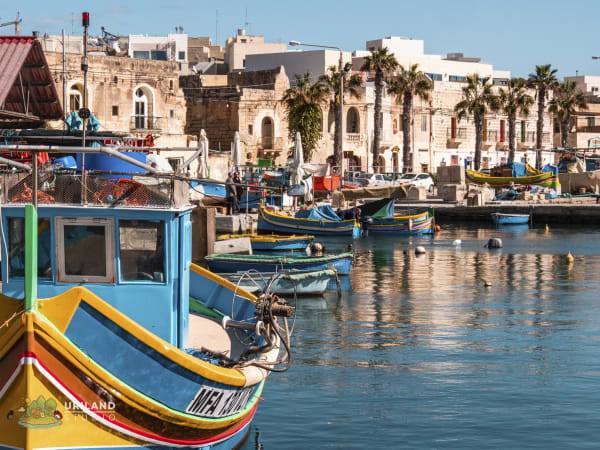
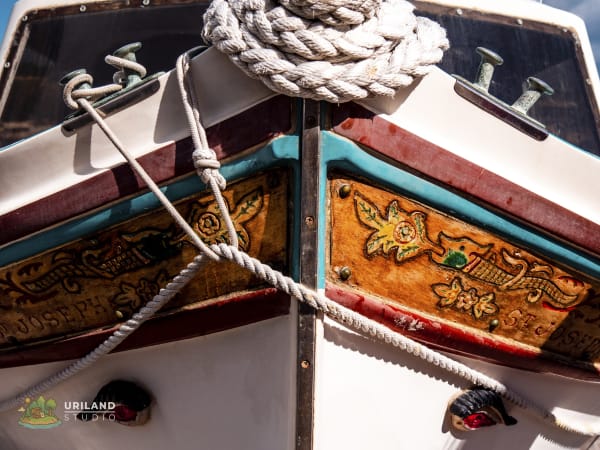
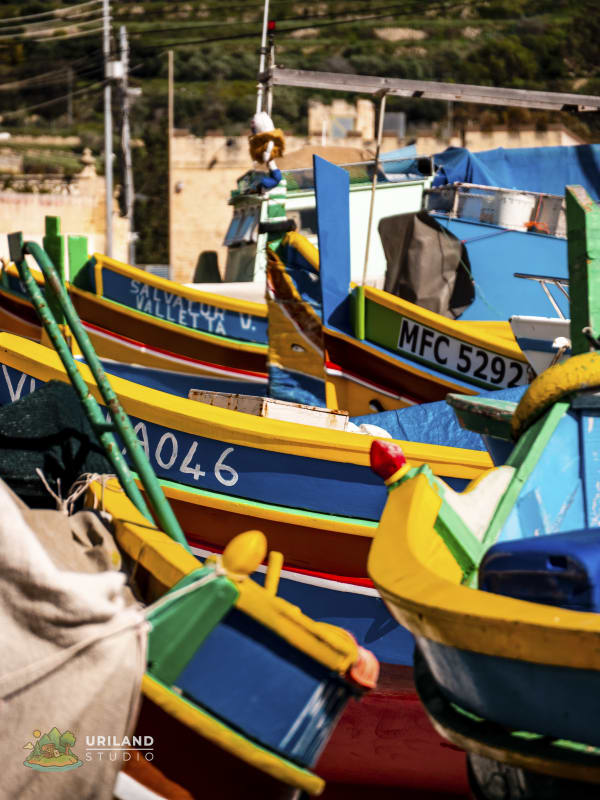
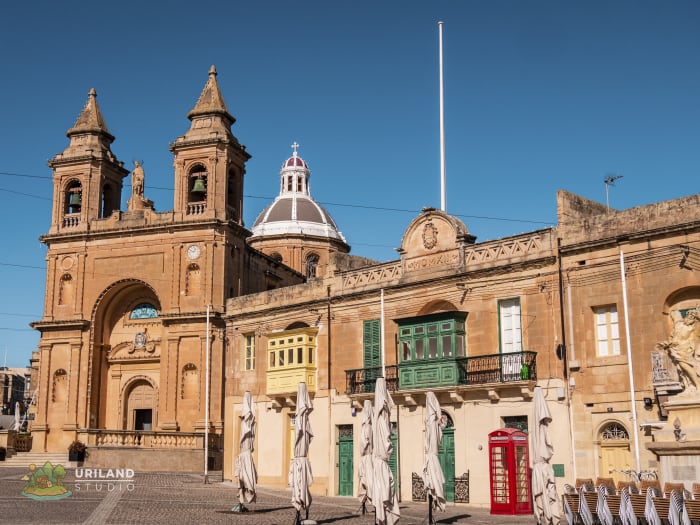
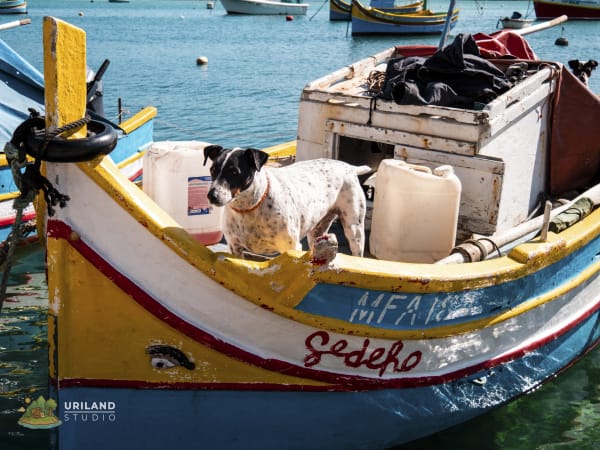
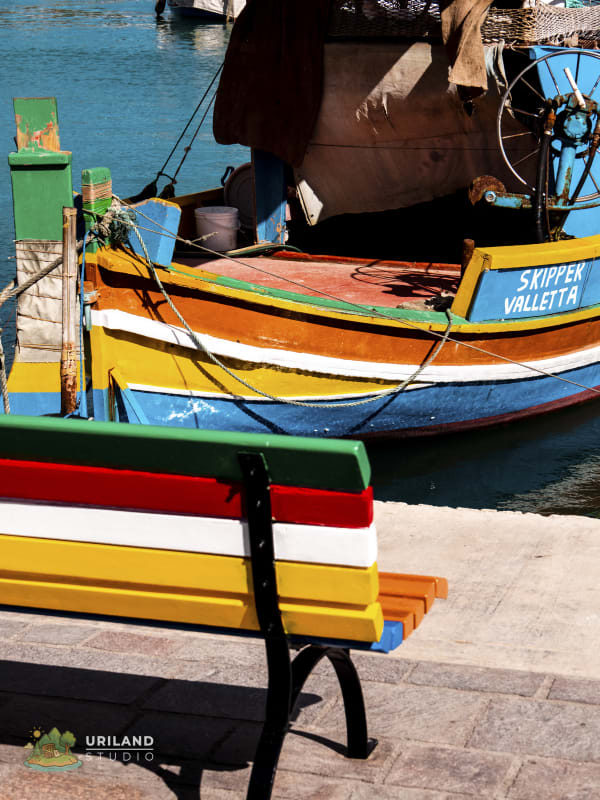
Blue, red, yellow and green luzzijiet fill the bay, many still carrying the watchful eyes painted on their bows. Behind them stand rows of limestone houses and the church of Our Lady of Pompei, while restaurants prepare for another day beside the water.
Marsaxlokk may appear on postcards because of its colours. But its real beauty is that behind the postcard, the village is still working.
A perfect place to discover the Malta that has always looked towards the sea.
A village whose name tells its story
Marsaxlokk sits around one of the largest natural harbours in Malta, on the south-eastern coast of the island. Its name combines the Arabic-derived Maltese word marsa, meaning harbour, with xlokk, the south-easterly wind that blows across the Mediterranean towards Malta.
Its relationship with the sea stretches far beyond the colourful fishing boats we see today. The surrounding area contains traces of thousands of years of human activity. Nearby Tas-Silġ developed into an important sanctuary whose archaeological remains span several periods, from the Neolithic through Phoenician, Punic and Roman times and into later Christian history.
Marsaxlokk Bay also witnessed one of the great turning points in Malta's history. Ottoman forces used the harbour when they arrived during the Great Siege of 1565, and centuries later the bay remained strategically important. Fort Delimara, overlooking the harbour, was built by the British between 1876 and 1878 to defend its approaches.
Yet despite armies, empires and centuries of change, fishing remained at the heart of Marsaxlokk. And in many ways, it still does.
The colourful boats that became a symbol of Malta
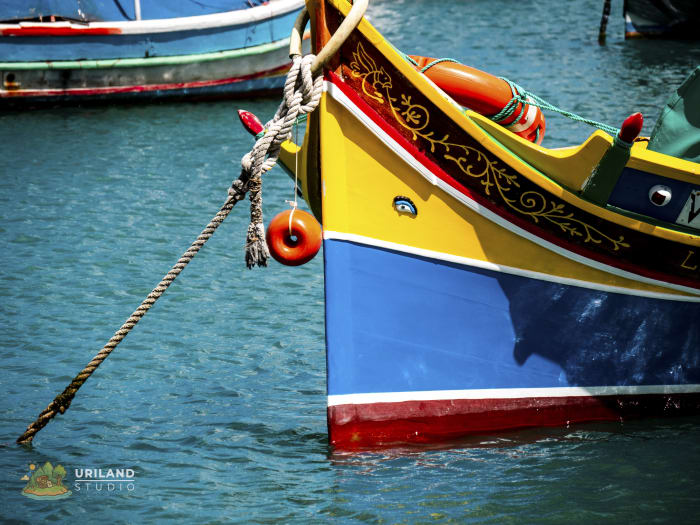
It is almost impossible to imagine Marsaxlokk without its boats. The traditional Maltese luzzu is immediately recognisable: a sturdy wooden fishing boat painted in combinations of brilliant blue, red, yellow and green. Many carry a pair of eyes on the bow, a protective symbol traditionally associated with ancient Mediterranean beliefs and often referred to as the Eye of Osiris. Heritage Malta describes the boats and their distinctive eyes as part of the living maritime heritage of the village.
They are not simply decorative relics placed in the harbour for visitors. Fishing remains part of the identity of Marsaxlokk, and traditional vessels can still be seen among more modern working boats. Their continued presence connects today's fishermen with generations who depended on the same sea.
Other traditional Maltese craft once shared these waters too. In 2026, one of Malta's last surviving firilla boats, more than a century old, was returned to the sea after an extensive restoration project involving Marsaxlokk Heritage, Heritage Malta and the Malta Tourism Authority. The firilla was traditionally rowed or sailed and used for fishing, but surviving examples have become increasingly rare.
Sunday morning at Marsaxlokk Market
Then there is Sunday. Marsaxlokk's waterfront changes character as stalls stretch along the promenade and the village fills with people. The Sunday market has become one of Malta's best-known markets, and although visitors will find souvenirs, clothes, local products and plenty of other goods, its identity remains inseparable from fishing.
Fish and seafood are the stars. The catch varies with the season, and that is part of the experience. Swordfish, sea bream, octopus and other Mediterranean species appear on the stalls, while lampuki — dorado or mahi-mahi — become particularly associated with Malta during their fishing season.
There is noise, bargaining, movement and the smell of the sea. Fishermen unload their catch while restaurant terraces begin filling only a few metres away. Come early and Marsaxlokk still feels like a fishing village going about its business. Arrive later and it becomes one of the liveliest Sunday destinations on the island. Both versions are worth seeing.
A culture built around the water
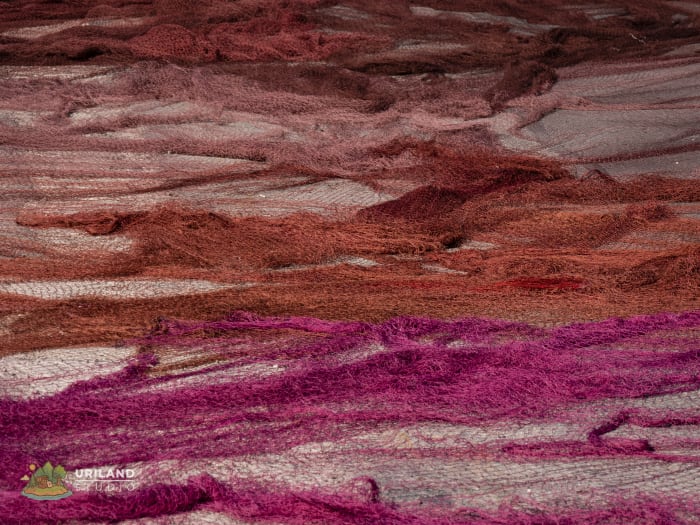
To understand Marsaxlokk properly, it helps to spend some time doing very little. Walk along the harbour rather than simply stopping for a photograph. Look at the names painted onto the boats. Watch fishermen repairing nets or working on their vessels. Sit outside with a coffee while the harbour changes around you.
Food is naturally part of the experience. Seafood restaurants line the waterfront, and eating freshly prepared fish while looking across at the boats that define the village creates one of those simple connections between place and plate that Malta does particularly well.
Religion is equally present. The parish church dedicated to Our Lady of Pompei dominates the waterfront, and the village's annual festa brings together another essential side of Maltese culture: processions, decorations, music, community and, inevitably, fireworks. The 2026 feast of Our Lady of Pompei was celebrated on 2 August.
Here, fishing, food, faith and family are not separate attractions. They are different parts of the same village.
Why it is worth visiting
Marsaxlokk is one of those places where Malta's contradictions somehow fit perfectly together. It is famous but still traditional. Photographed constantly but still authentic. Its harbour can be crowded with visitors while, a few metres away, someone is quietly repairing a fishing net exactly because tomorrow's work depends on it.
And there is much more nearby than the harbour itself. The Marsaxlokk area includes the ancient archaeological landscape of Tas-Silġ, the Victorian Fort Delimara and the rocky coastline around Delimara. St Peter's Pool, one of Malta's best-known natural swimming spots, is also nearby.
But you do not necessarily need an itinerary here. Sometimes the best Marsaxlokk experience is simply to arrive in the morning, walk beside the boats, explore the market, have lunch overlooking the harbour and stay long enough to watch the light begin to soften across the water.
Visiting Marsaxlokk
Marsaxlokk lies on Malta's south-eastern coast and can easily be visited as a half-day or full-day trip from other parts of the island.
Sunday morning is the classic time to visit if you want to experience the famous market at its liveliest. For a quieter version of the village, visit on a weekday morning, when the waterfront is calmer and the fishing harbour becomes the main character again.
If you have more time, combine the village with the surrounding coast, St Peter's Pool or one of the historic sites around the harbour. And bring a camera — you will probably tell yourself it is for the colourful boats. It won't only be for the boats.
Marsaxlokk is a reminder that some of Malta's most beautiful traditions were never created to become attractions. They existed because people needed them: boats to fish, a harbour to shelter in, a market to sell the day's catch and a community built around the sea. Centuries later, the colours may attract us first, but it is the life behind them that makes us stay.
Some places don't need to be dressed up to be worth telling stories about — they just need someone willing to look closely. That's the same instinct behind every story we publish.
